The Instinct to Look Outward
When something isn’t working in a business, the first reaction is almost automatic.
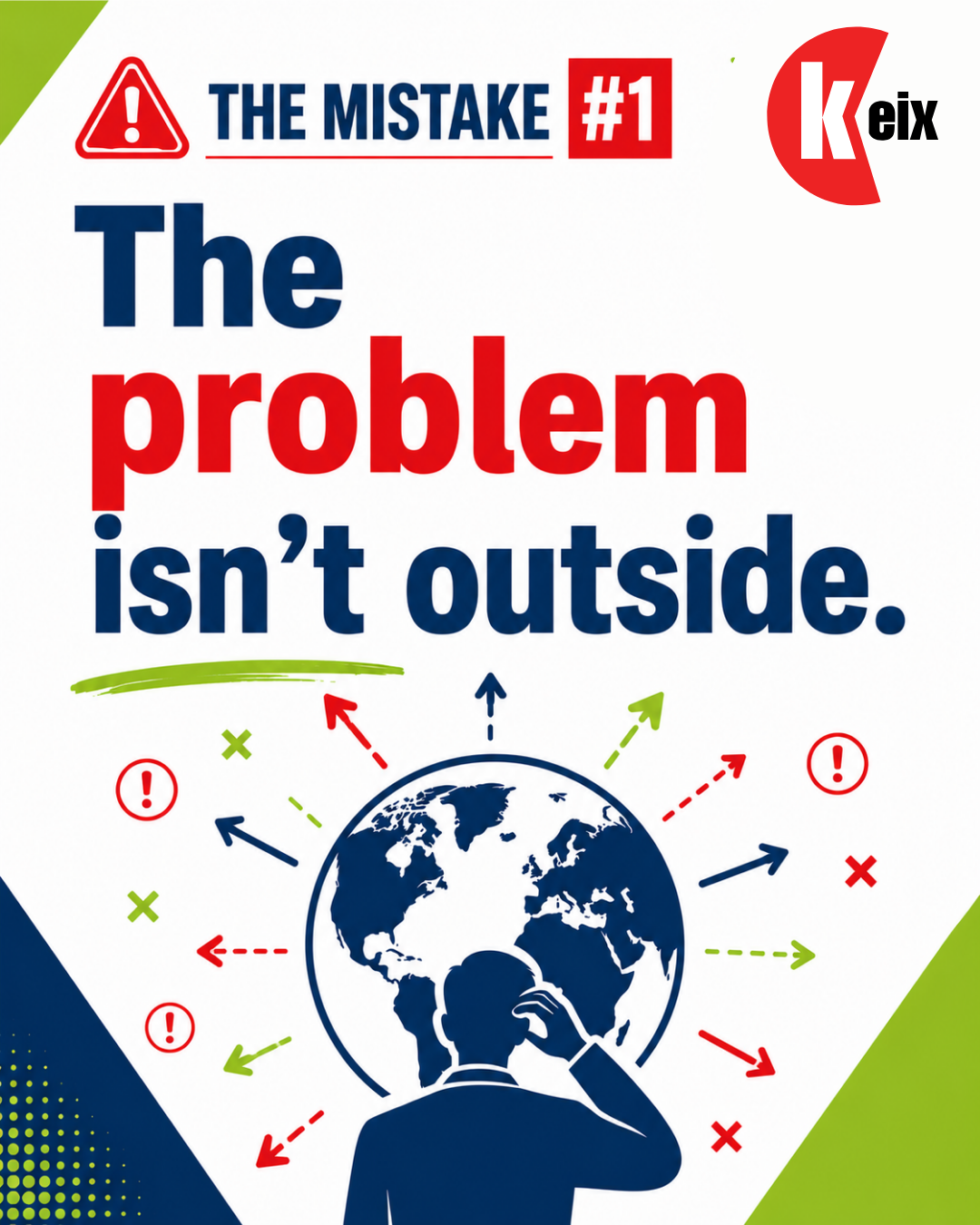
You look outside.
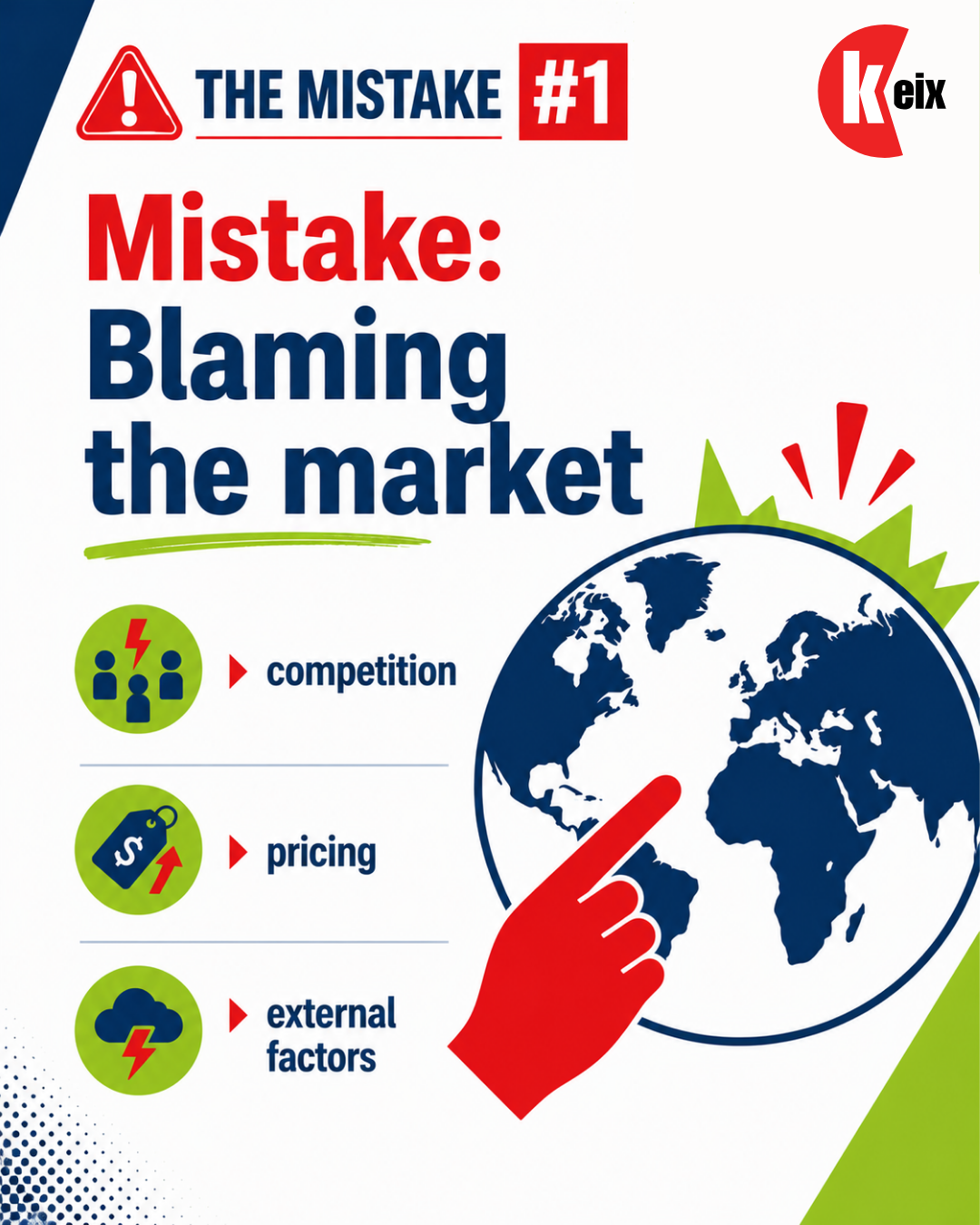
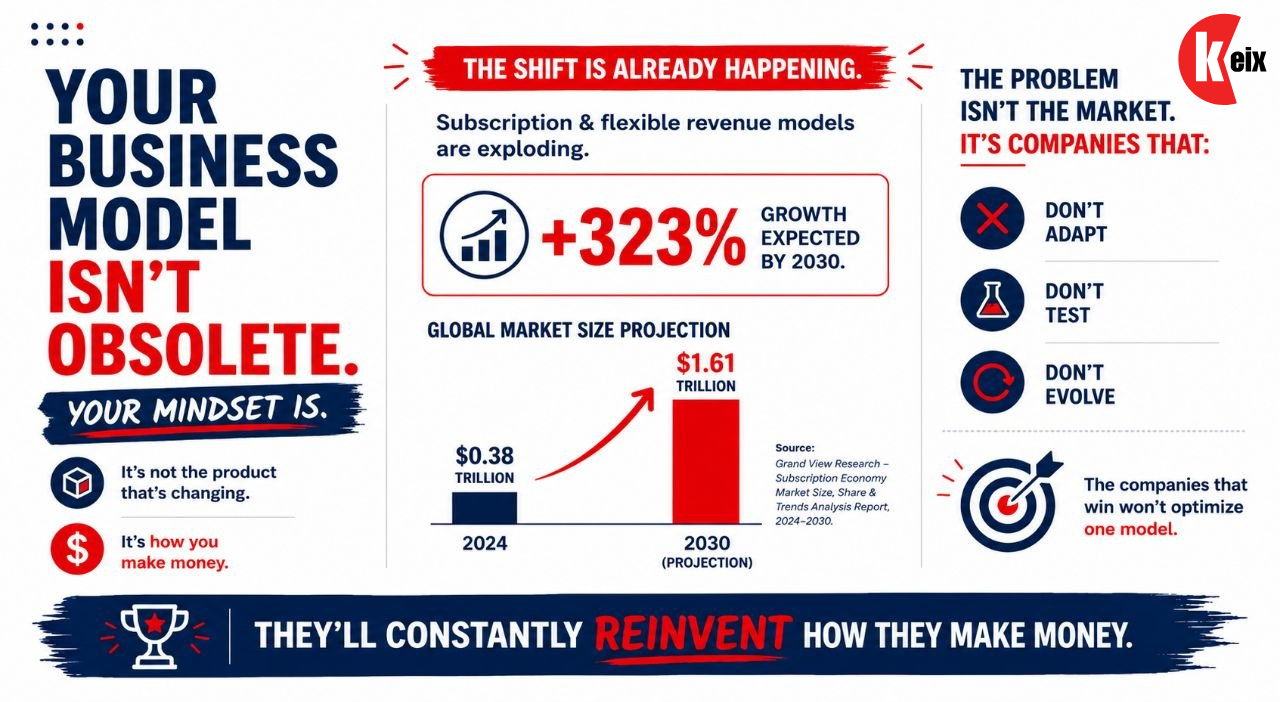
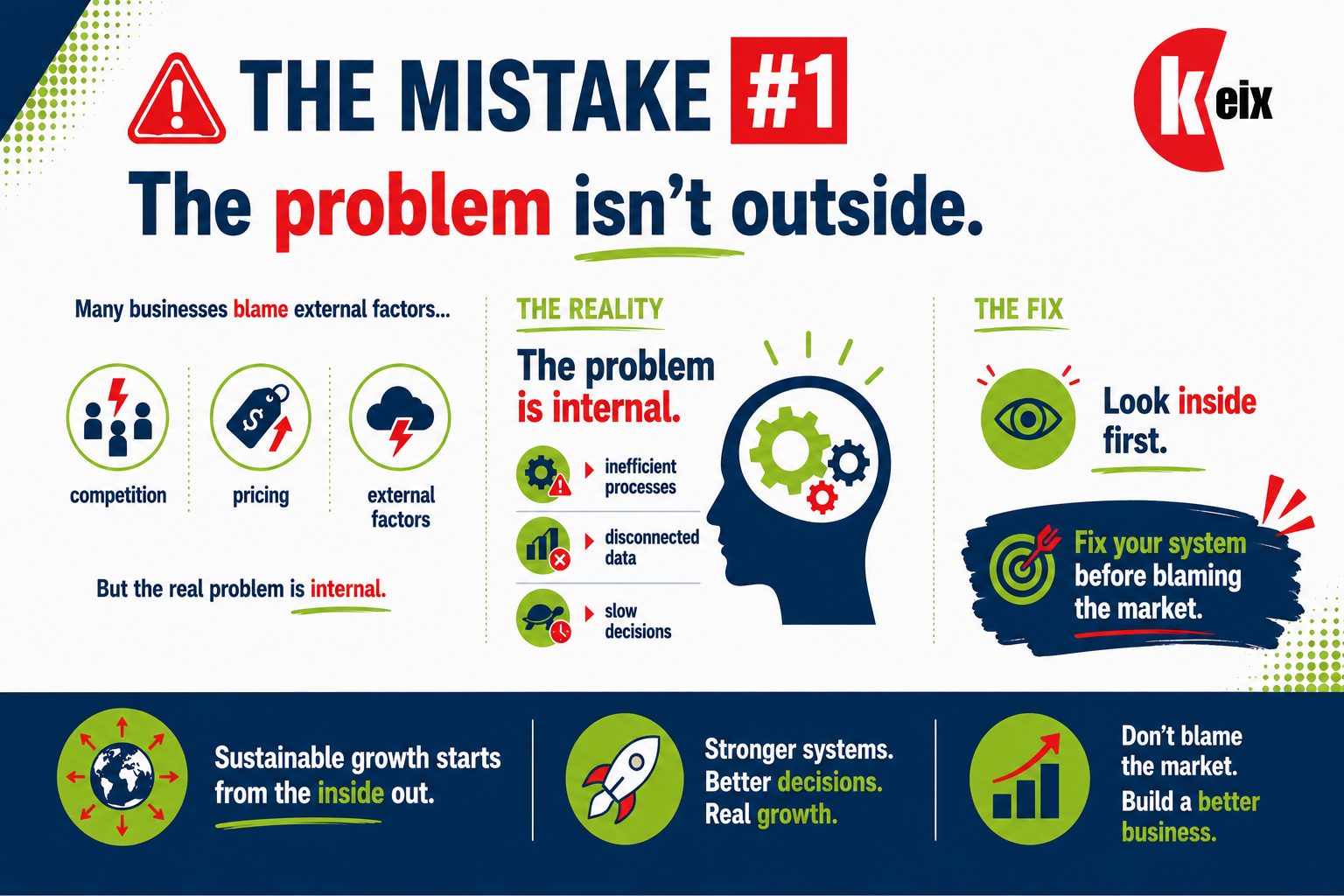
Maybe it’s the market shifting. Maybe competitors are becoming more aggressive. Maybe pricing pressure is squeezing margins, or external conditions are simply “not favorable.”
These explanations are not wrong. They’re often partially true.
But they share a common trait: they place the cause somewhere else.
And while that can feel logical, even justified, it can also be limiting. Because the moment the problem is framed as external, the ability to act on it becomes smaller.
After all, you can’t control the market.
A Narrative That Feels Right
Over time, this outward focus can quietly turn into a narrative.
It shows up in conversations, in meetings, in strategic discussions. The language becomes familiar: “We’re struggling because of competition,” or “This market just isn’t favorable right now.”
These statements create a sense of explanation. They give context. They make the situation feel understandable.
But they also do something else.
They shift attention away from what’s happening inside the organization.
And that’s where the real story often is.
What Happens Beneath the Surface
If you take a step back and look more closely, not at the market, but at the way the business actually operates, a different picture starts to emerge.
It’s not usually dramatic. There’s no single, obvious failure.
Instead, it’s a collection of small inefficiencies that, over time, begin to shape outcomes.
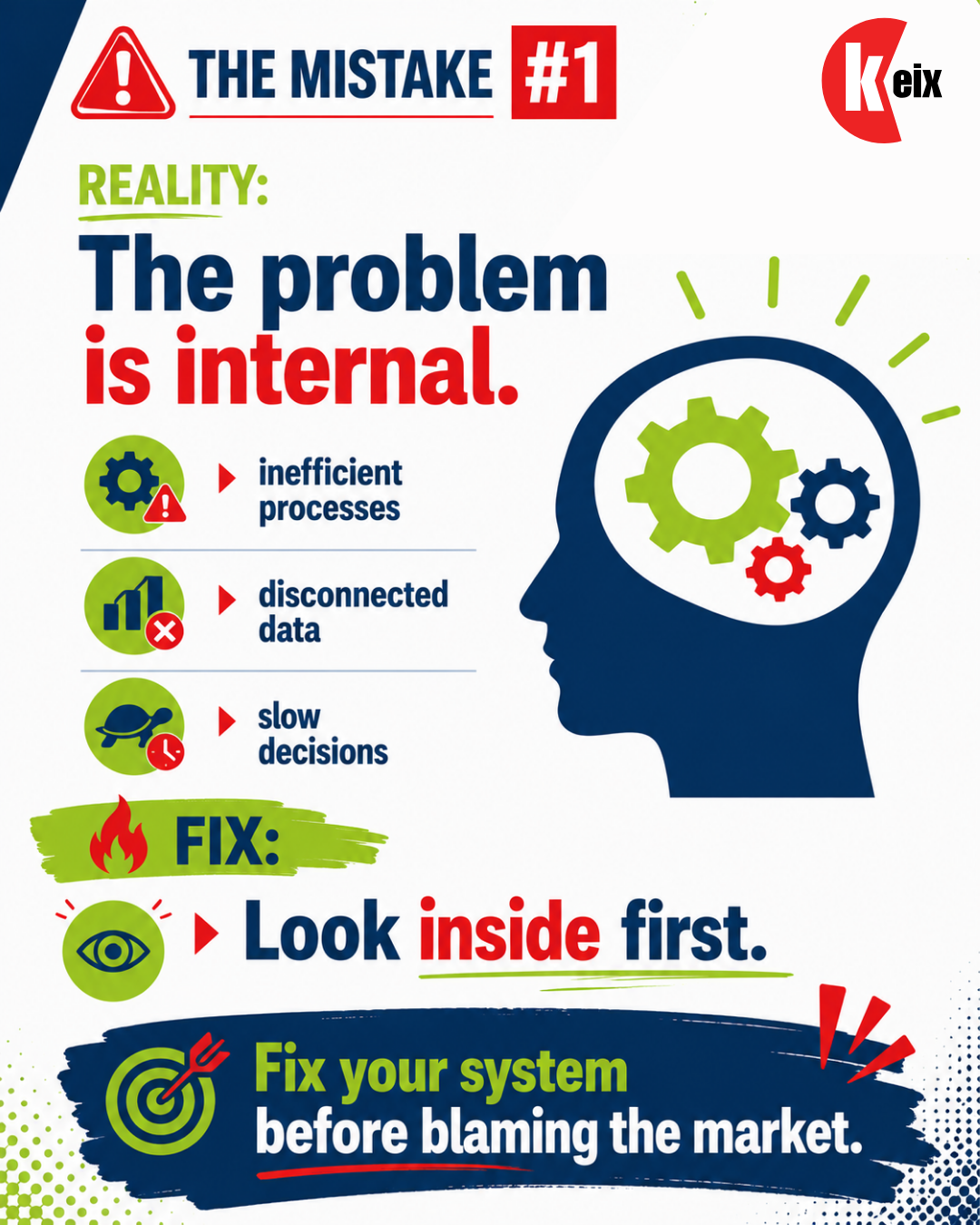
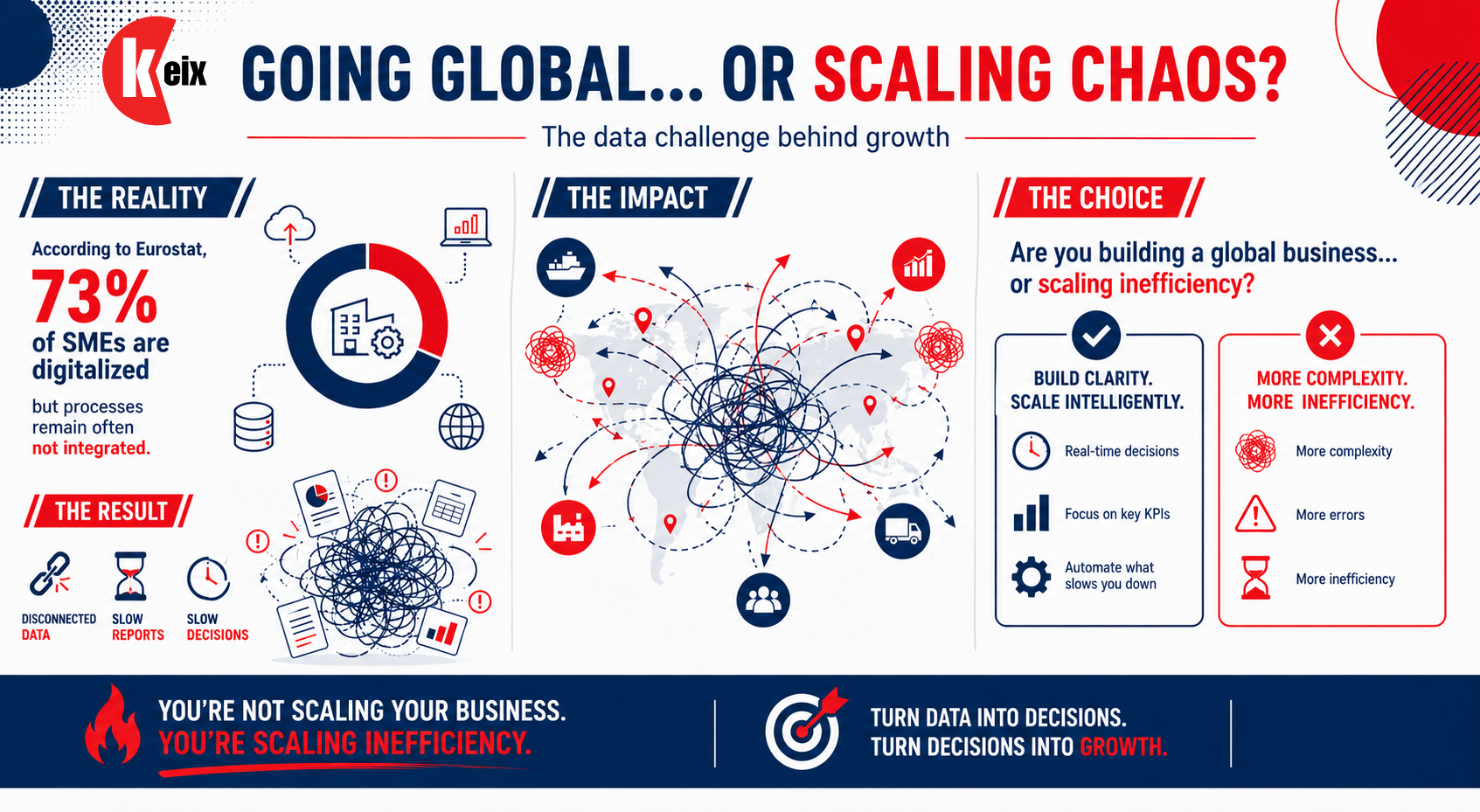
Processes that have become more complex than necessary. Data that lives in different systems, requiring effort just to be aligned. Decisions that take longer than they should, not because they are difficult, but because clarity is harder to reach.
None of these issues, on their own, feel critical. They are often absorbed into the day-to-day rhythm of the company.
People adapt. Workarounds appear. Things keep moving.
But not as fast, or as clearly, as they could.
The Quiet Weight of Friction
What makes internal inefficiencies particularly challenging is how subtle they are.
They don’t stop the business. They slow it down.
A report takes a bit longer to prepare. A decision is pushed to the next meeting. A team spends extra time aligning on numbers that should already be clear.
Individually, these moments seem insignificant. They’re easy to justify, easy to ignore.
But collectively, they create friction.
And over time, that friction becomes weight. It makes the organization heavier, less responsive, less able to adapt quickly.
From the outside, it might look like the company is simply facing a tough market.
From the inside, it’s often something else.
When Data Stops Driving Action
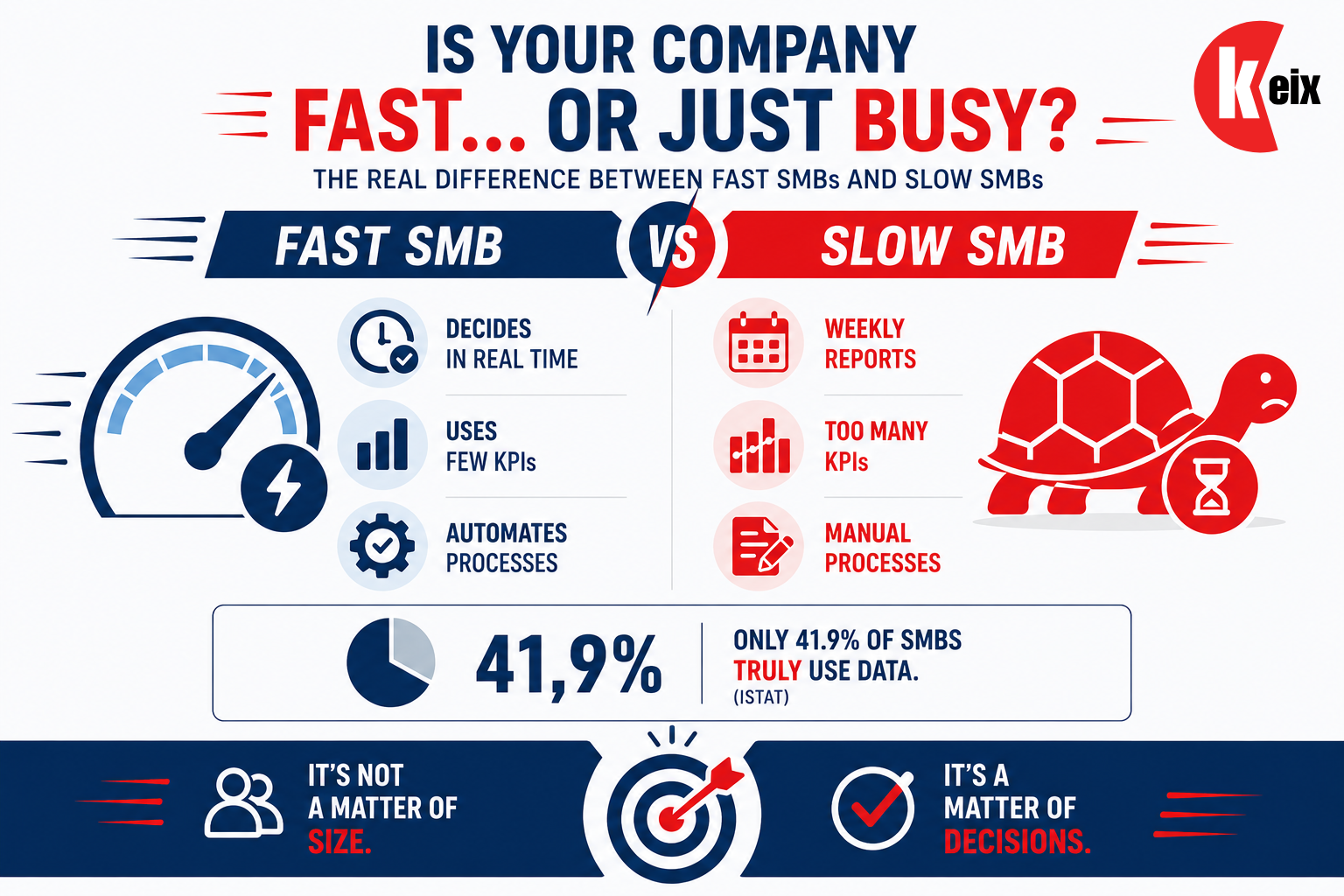
In many companies today, there is no shortage of data.
Dashboards are built, metrics are tracked, reports are shared regularly. Visibility, in theory, is not the problem.
And yet, something doesn’t fully connect.
Data is present, but decisions are still slow. Insights exist, but action doesn’t always follow.
This happens when data becomes something to observe rather than something to act on.
Instead of guiding decisions, it accumulates. It informs discussions, but doesn’t necessarily move them forward.
And in that gap, between knowing and doing, time is lost.
The Risk of Looking in the Wrong Direction
Focusing too much on external factors doesn’t just misinterpret the situation. It delays change.
Because if the problem is “out there,” then the solution must also be out there.
So the organization waits. It adjusts expectations. It adapts to conditions instead of reshaping how it operates.
Meanwhile, internal inefficiencies remain untouched. They continue to slow things down, quietly but consistently.
And over time, they become part of the system.
A Shift in Perspective
The turning point for many companies doesn’t come from a new tool or a new strategy.
It comes from a different question.
Not “What’s happening in the market?” But “How are we responding to it?”
This shift is subtle, but powerful.
Because it brings the focus back to something the company can actually influence: its own way of working.
Processes can be simplified. Data can be connected. Decisions can be made faster and with more clarity.
And as these changes take shape, the organization starts to move differently.
Building Strength from the Inside
Companies that perform consistently well are not necessarily those operating in perfect conditions.
They are the ones that have built internal clarity.
Their systems support decision-making instead of slowing it down. Their data is not just available, but aligned. Their processes are designed not just to function, but to enable action.
There is a sense of direction that runs through the organization.
And because of that, they are able to respond to external challenges with greater speed and confidence.
Rethinking Where the Problem Really Is
It’s easy to assume that improving results requires changing the environment.
A better market. Less competition. More favorable conditions.
But more often than not, the real opportunity lies elsewhere.
Inside the organization itself.
In how information flows. In how decisions are made. In how quickly insight turns into action.
This is where performance is shaped.
Final Thought
Looking outward is natural. It’s often the first instinct.
But the most impactful changes rarely start there.
They start when a company turns its attention inward, not to assign blame, but to understand how it operates, where it slows down, and how it can improve.
Because in the end, the market is the same for everyone.
What makes the difference is how a company works within it.
And that difference is built from the inside out.