The Ambition to Grow
Every company, at some point, starts looking beyond its current boundaries.
Growth becomes the natural next step. New markets, new customers, new opportunities. “Going global” is often seen as a sign that things are working—that the business is strong enough to expand, to replicate its success elsewhere.
And in many ways, that’s true.
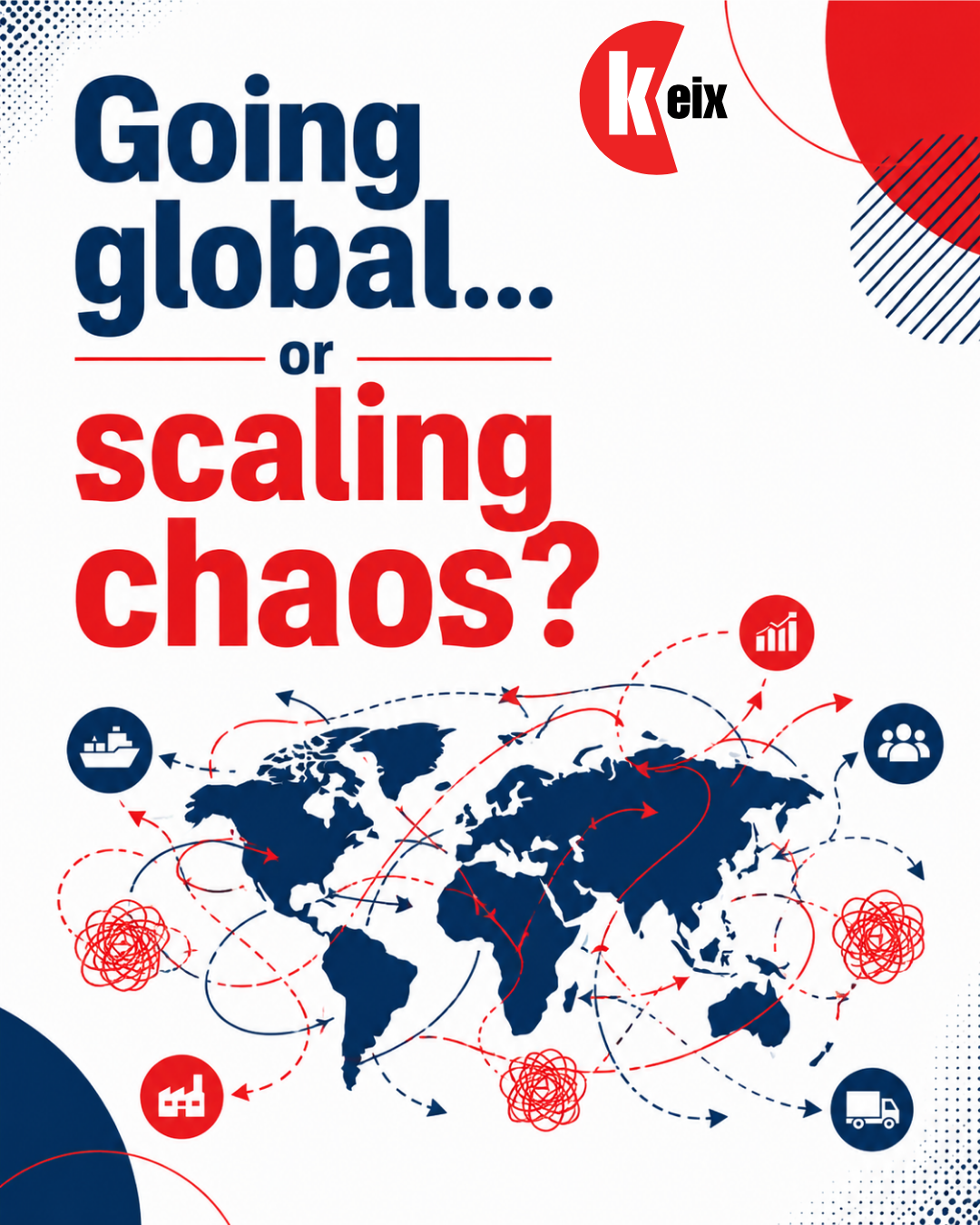
But there’s a question that rarely gets asked at that stage: what exactly are you scaling?
Because growth doesn’t just multiply your strengths. It multiplies everything.
The Illusion of Being “Digital”
If you ask most companies today, they will tell you they are digital.
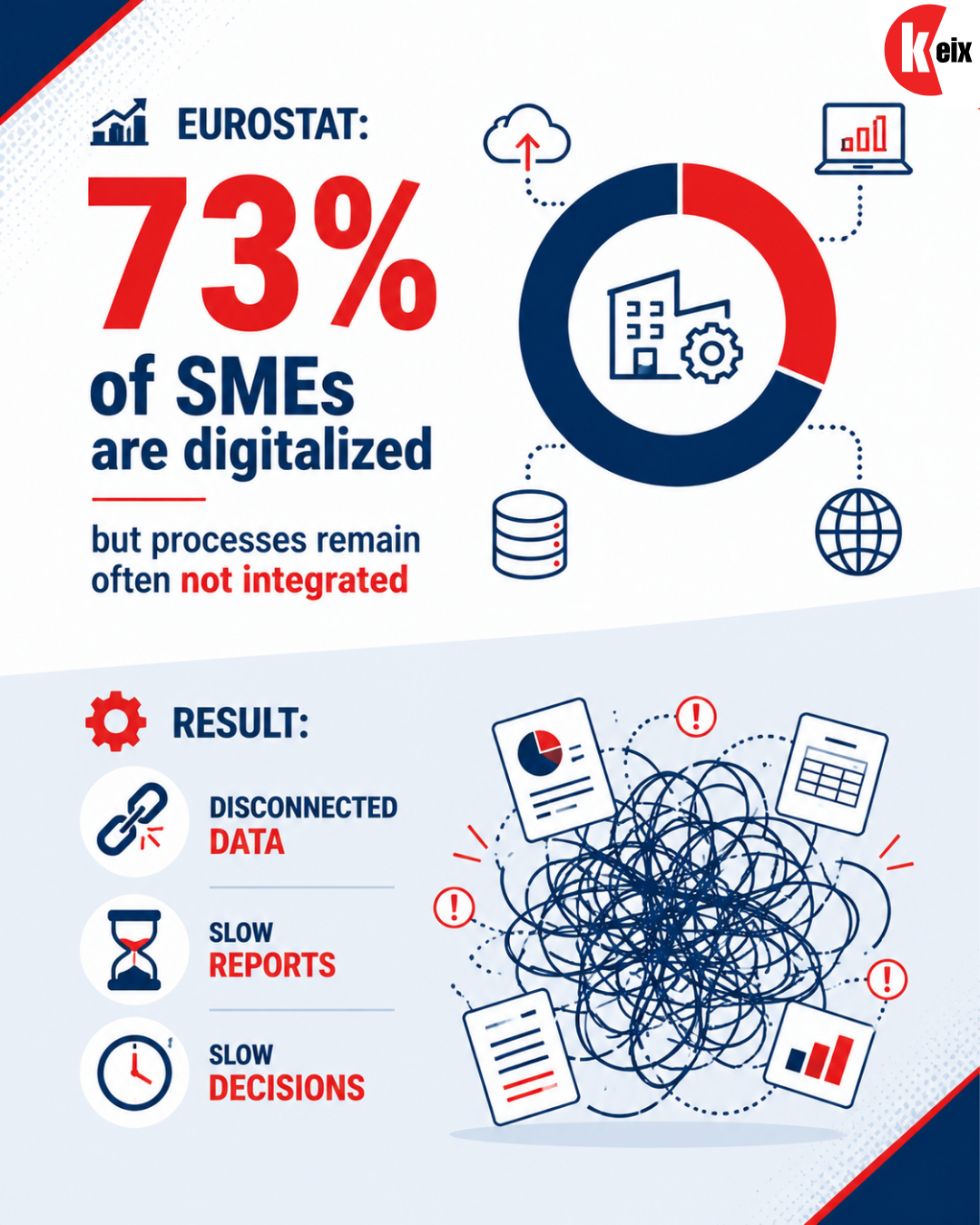
They use modern tools. They store data in the cloud. They have dashboards, reports, platforms for every function. On the surface, the transformation seems complete.
But if you step inside the organization, the picture often looks different.
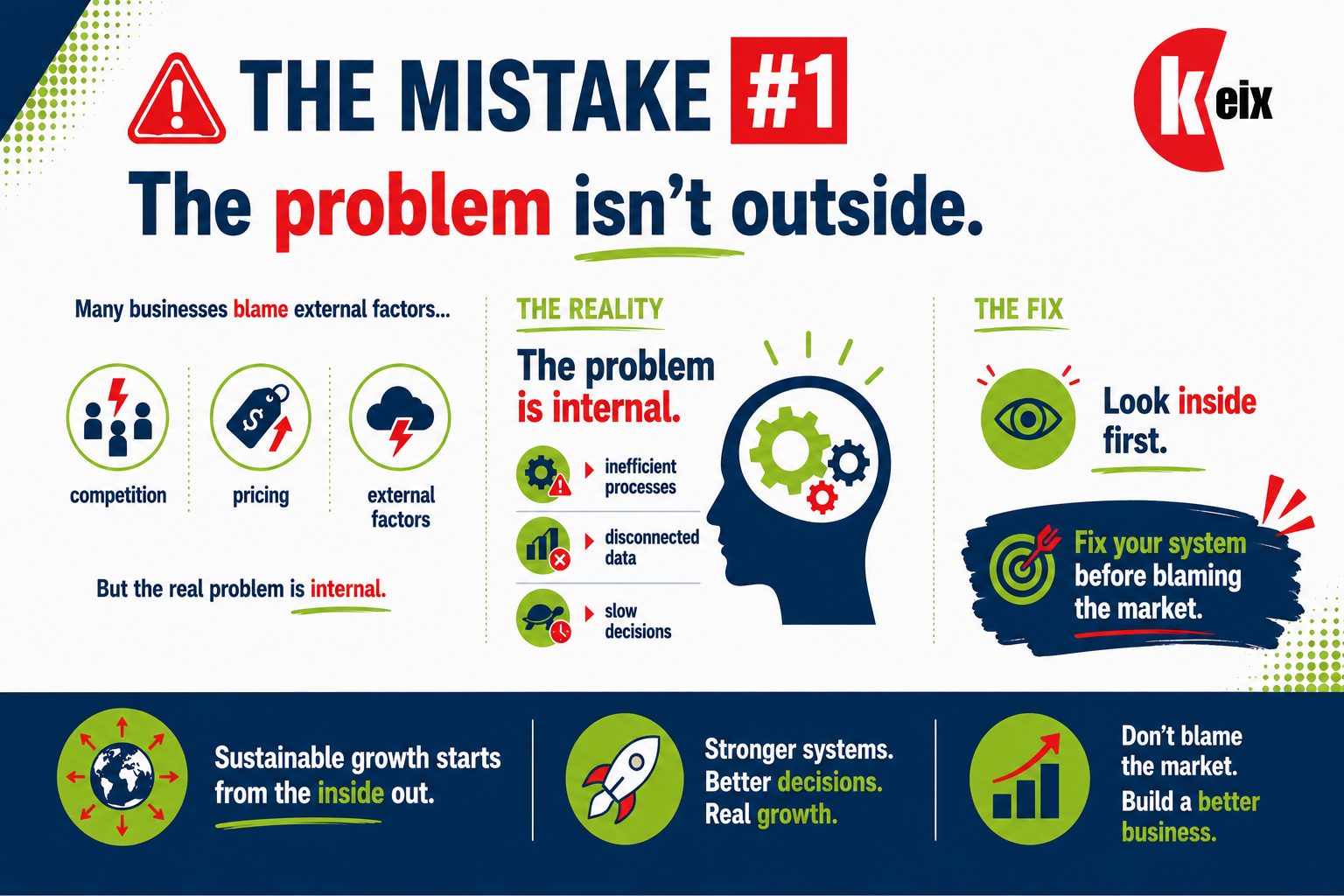
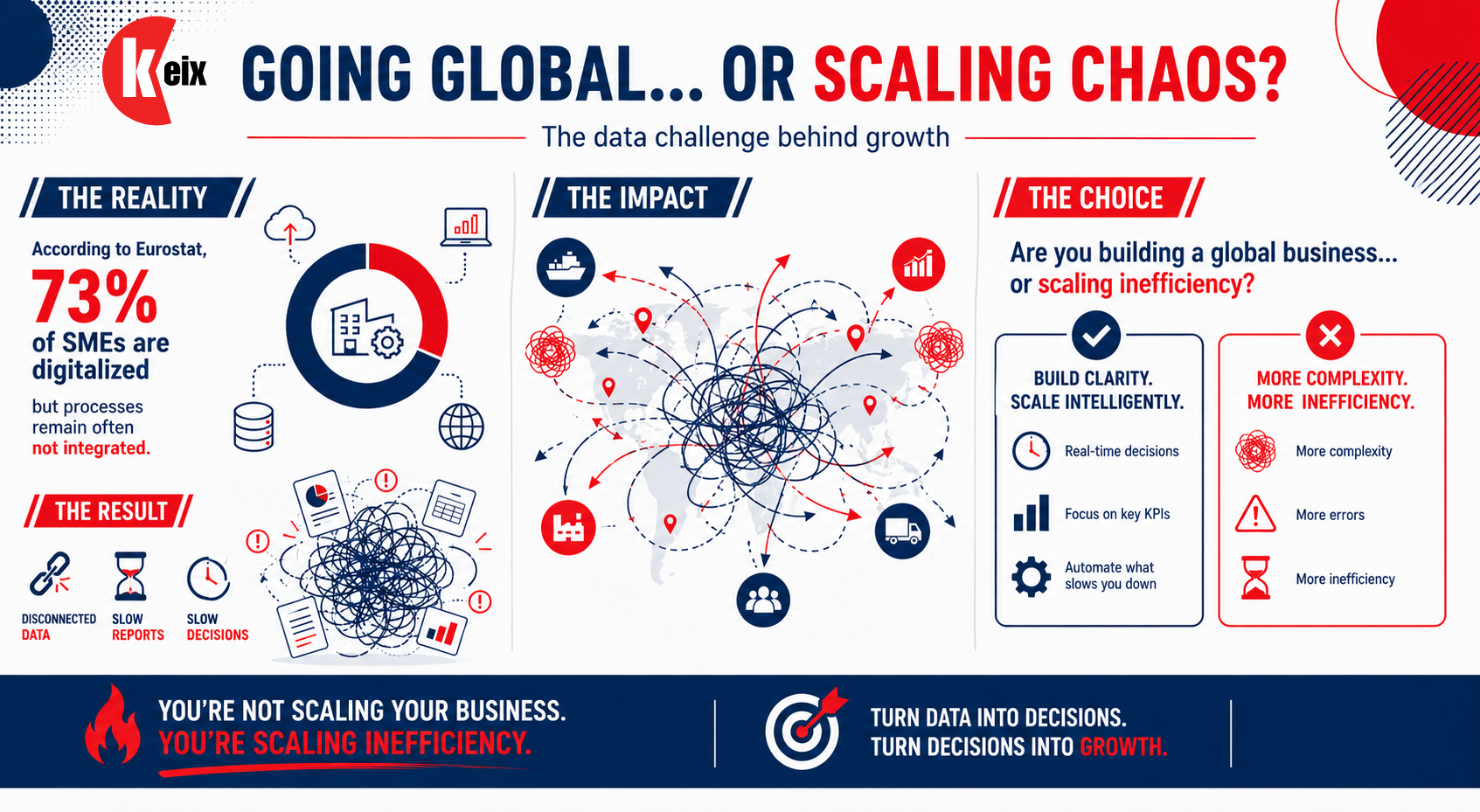
Systems don’t fully communicate. Data is scattered across departments. Processes have been built over time, layered one on top of another, without a clear design connecting them.
Everything works—individually. But not always together.
And that’s where the problem begins.
When Growth Meets Fragmentation
In a stable environment, these inefficiencies can remain somewhat manageable. Teams learn to navigate them. Workarounds are created. People compensate where systems fall short.
But growth changes the equation.
As soon as a company starts expanding, complexity increases rapidly. New markets introduce new variables—different regulations, currencies, customer expectations. Each layer adds pressure to an already fragmented system.
What once felt like a minor inconvenience becomes a structural issue.
Data takes longer to consolidate. Reports require more effort. Aligning teams becomes harder. And decisions—perhaps the most critical part of any organization—start to slow down.
Not because people don’t want to act, but because clarity becomes harder to reach.
The Quiet Impact of Disconnected Data
One of the most underestimated consequences of this fragmentation is how it affects decision-making.
When data is not integrated, it loses immediacy. Information arrives late, often after it has been manually collected, checked, and reconciled. By the time it reaches decision-makers, it’s already a step behind reality.
This creates hesitation.
People double-check numbers. They question the source. They wait for confirmation. And slowly, without anyone explicitly deciding it, the organization becomes slower.
What was supposed to support decisions ends up delaying them.
Over time, this doesn’t just impact efficiency. It affects confidence. It creates a culture where acting quickly feels risky, and waiting feels safer.
Scaling Inefficiency
This is where growth reveals its most counterintuitive truth.
If the underlying system is not designed for clarity and integration, scaling will not improve it.
It will amplify it.
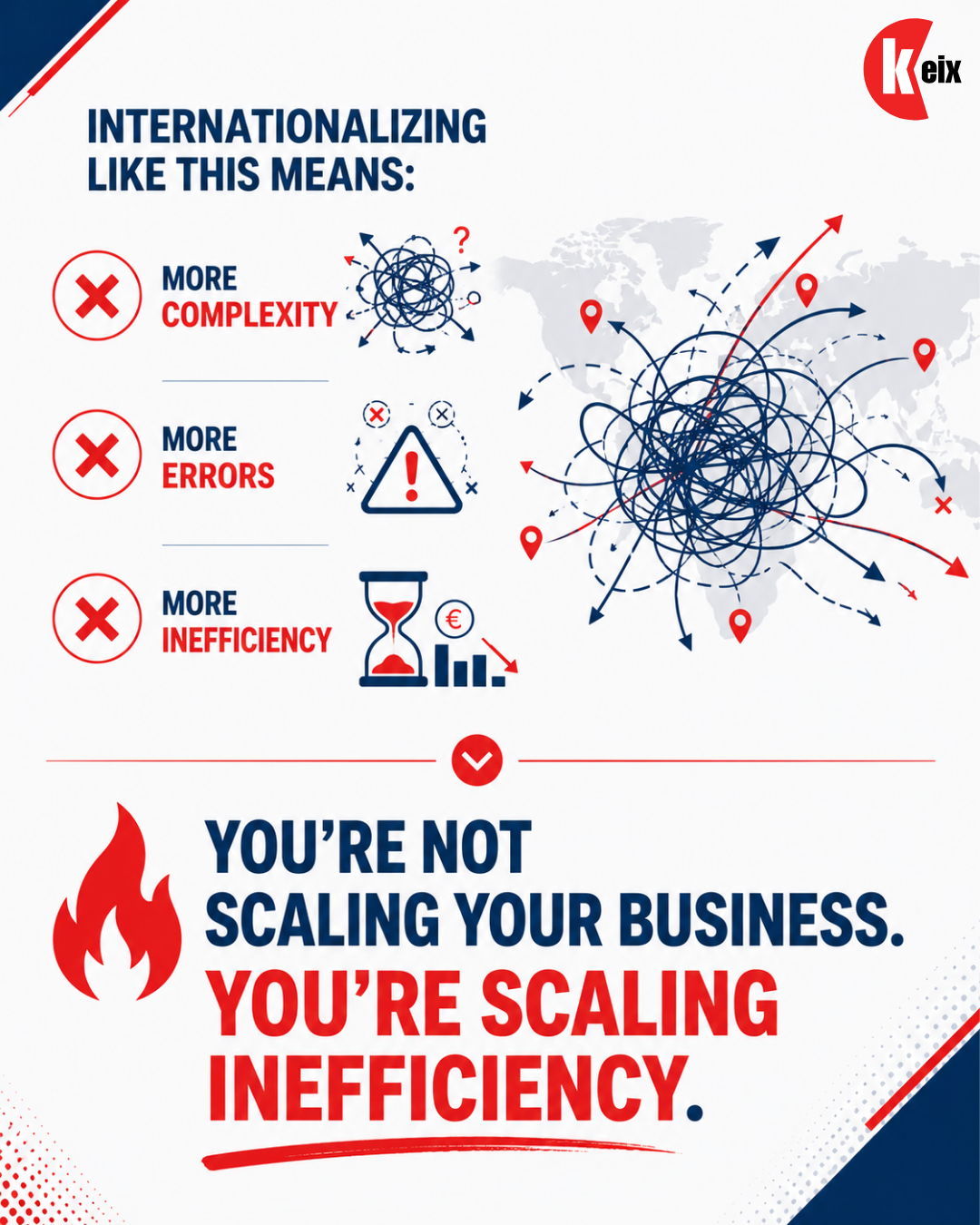
More markets mean more data. More data means more complexity. More complexity means more friction.
And that friction spreads across the entire organization.
Manual processes increase. Coordination becomes more difficult. Errors become more frequent, not because people are less capable, but because the system itself becomes harder to manage.
At that point, the company is no longer just growing.
It is scaling its inefficiencies.
A Different Perspective on Scale
True scalability looks very different from this.
It’s not just about handling more volume or entering more markets. It’s about maintaining clarity as complexity increases.
Companies that scale well are not necessarily the ones with the most tools, but the ones with the most connected systems. Data flows across the organization in a way that creates a shared understanding, rather than isolated views.
Decisions don’t depend on slow reporting cycles. They happen continuously, supported by timely and reliable information.
There is less noise, not more. Less friction, not more.
And as a result, speed becomes a natural outcome.
From Complexity to Clarity
Making this shift doesn’t happen by adding more layers. In fact, it often requires the opposite.
It means simplifying. Connecting what is fragmented. Removing what is unnecessary. Designing processes not just to function, but to support decisions.
It also requires a change in mindset.
Instead of asking how to manage increasing complexity, the focus shifts to reducing it. Instead of optimizing each part in isolation, the goal becomes aligning the whole.
This is not a small adjustment. It touches how teams work, how data is used, and how priorities are defined.
But it creates something that growth alone cannot guarantee: control.
Rethinking What It Means to Grow
At a certain point, every company faces a choice.
It can continue expanding on top of existing structures, accepting the increasing complexity as part of the journey. Or it can pause and rethink the foundation on which that growth is built.
Because going global is not just about reaching new markets.
It’s about doing so without losing clarity, without slowing down, without turning opportunity into operational chaos.
Final Thought
Growth is powerful. It creates momentum, opens doors, and expands possibilities.
But without the right structure underneath, it can also create confusion, friction, and inefficiency at scale.
So the real question is not simply whether you are growing.
It’s whether your growth is making your business stronger—or just more complex.
Because in the end, scaling a business and scaling chaos can look very similar.
Until the results start to diverge.