The End of Product-Centric Thinking
For a long time, companies believed innovation was mostly about products.
Build something better, faster, cheaper, or more advanced than everyone else, and growth would naturally follow. Entire industries were built around this logic. Product development became the center of strategy, while competitive advantage was often measured through technology, efficiency, or scale.
And for decades, that approach worked.
But today, something feels different.
Products alone are becoming less capable of sustaining long-term differentiation. Features can be copied faster, technologies spread more quickly, and customer expectations evolve almost in real time. What once gave companies years of advantage can now be replicated in months.
Yet many organizations are still trying to compete using the same mental frameworks they used ten or twenty years ago.
The real transformation happening today is not just about the products themselves. It's about the systems around them, the way companies create value, monetize it, deliver it, and continuously adapt it.
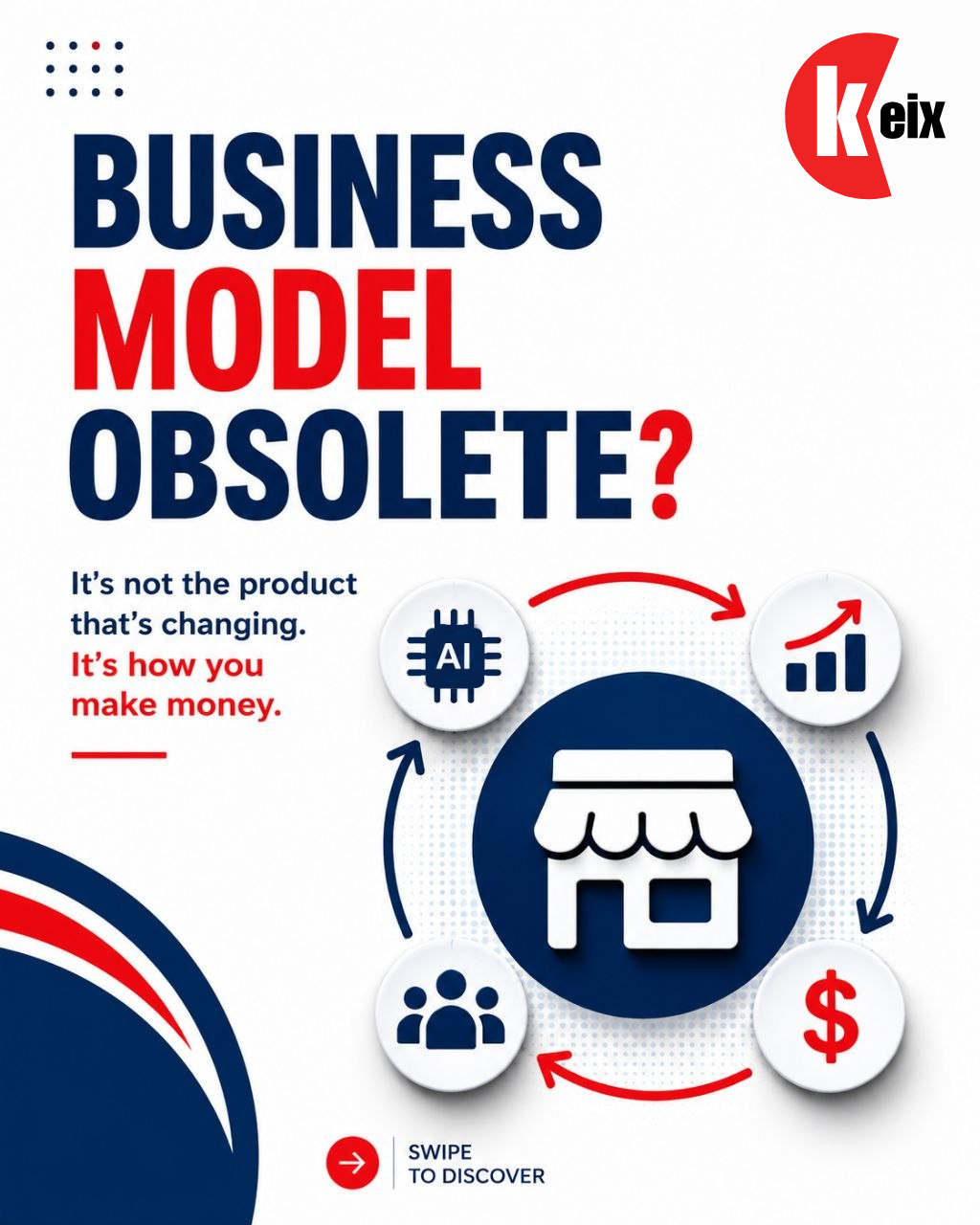
In many ways, competition is shifting from products to business models.
The Rise of Adaptive Revenue Models
You can already see this shift happening across almost every industry.
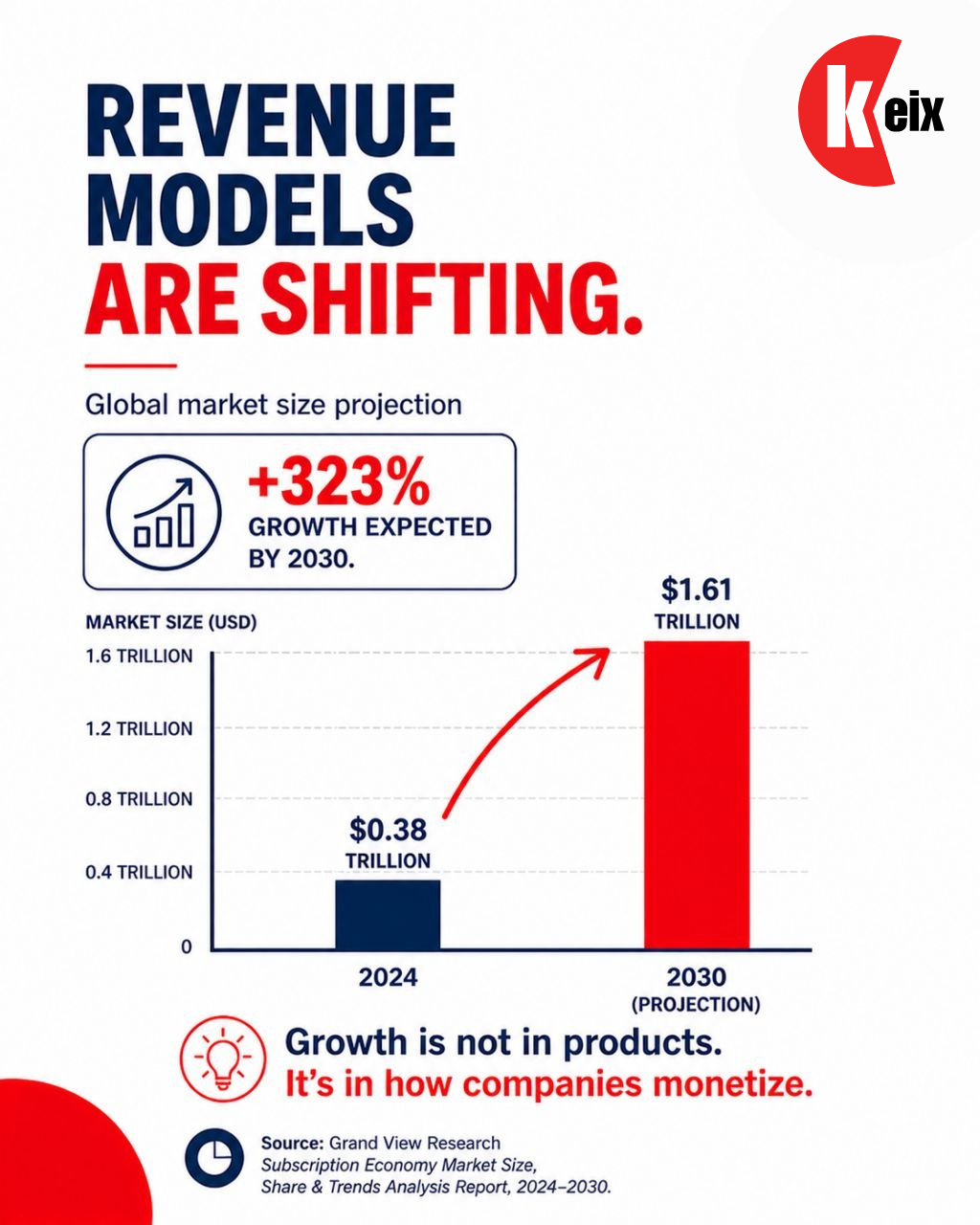
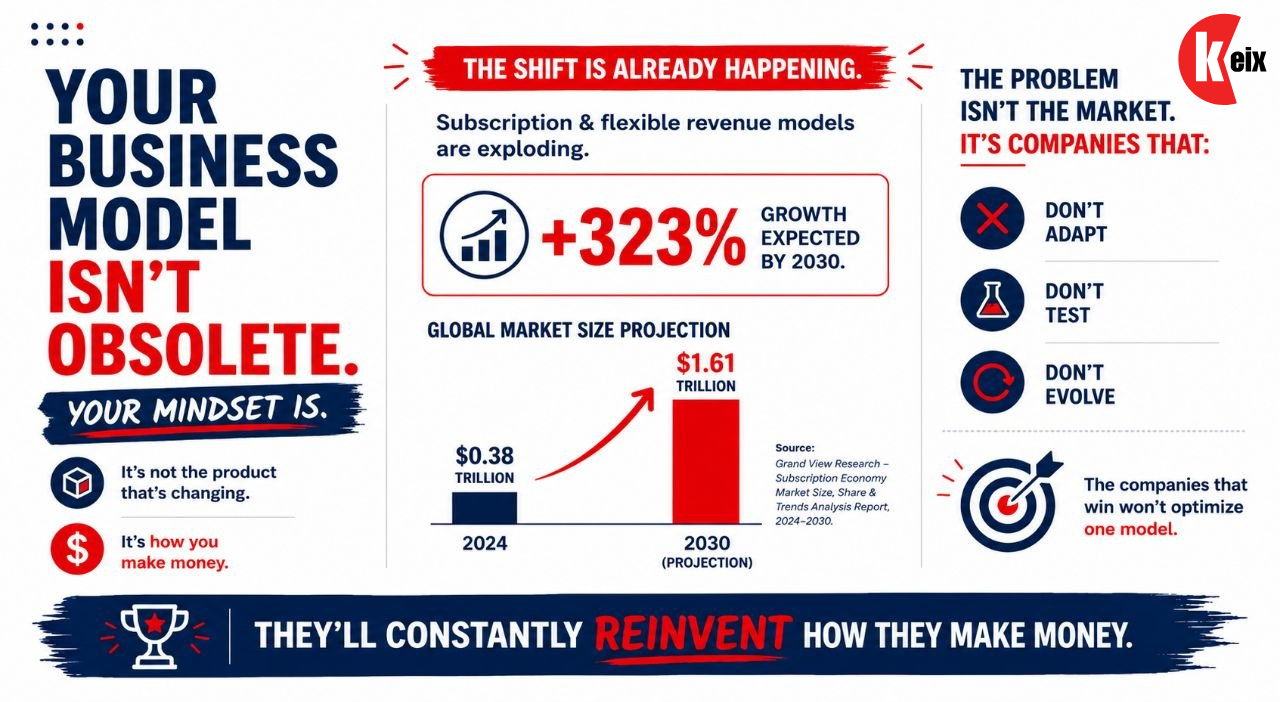
Subscription systems have transformed markets that once relied entirely on one-time purchases. Software moved from licenses to recurring services. Media shifted from ownership to access. Even traditionally stable sectors are experimenting with usage-based pricing, platform ecosystems, and hybrid monetization structures.
This transformation is not happening by accident.
Technology, especially AI, is accelerating it.
Most discussions around AI still focus on productivity: automating tasks, reducing costs, generating content faster, or improving workflows. Those developments matter, of course. But they are only the surface-level effects.
The deeper impact of AI is structural.
AI changes how companies design customer relationships. It changes how services scale. It changes how personalization works. It changes how quickly organizations can experiment, iterate, and launch entirely new forms of value creation.
That's why the companies benefiting most from AI won't simply be the ones automating faster.
They'll be the ones capable of rethinking how their business actually works.
The Danger of Optimizing the Past
This is where many organizations struggle.
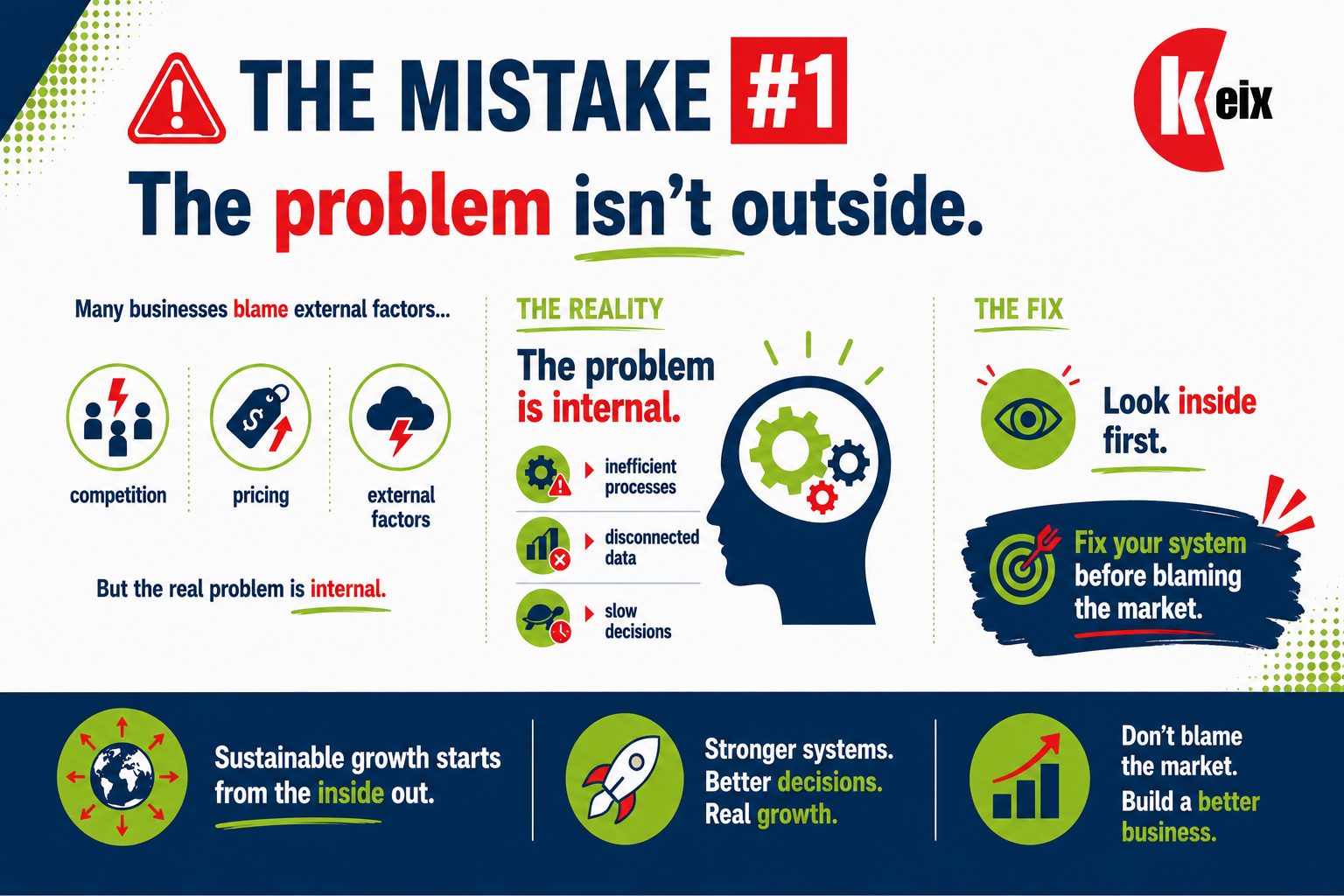
A surprising number of companies are still optimizing existing models rather than questioning whether those models still make sense in the first place. They become highly efficient at operating inside structures that were designed for markets that no longer exist in the same way.
History has shown this pattern repeatedly.
Kodak didn't lack engineering talent. Nokia didn't lack resources. Blockbuster didn't lack brand recognition. In many cases, these were incredibly optimized organizations.
But optimization and adaptation are not the same thing.
And that distinction matters more than ever today.
Markets are becoming increasingly fluid. Customer expectations evolve continuously, technologies shorten competitive cycles, and new entrants can scale faster than ever before. In this environment, static business models become fragile very quickly.
The greatest risk for modern companies is not inefficiency.
It's becoming extremely efficient at something the market values less and less over time.
Why Adaptability Is Becoming the Real Advantage
This is why adaptability is quietly becoming one of the most valuable strategic capabilities a company can develop.
Not adaptability as a slogan, but as an operational reality.
The ability to test quickly. To experiment without fear. To rethink monetization. To redesign customer interactions. To evolve before the market forces you to.
Many organizations still treat reinvention as something that only happens during crises. But increasingly, reinvention is becoming part of normal business operations.
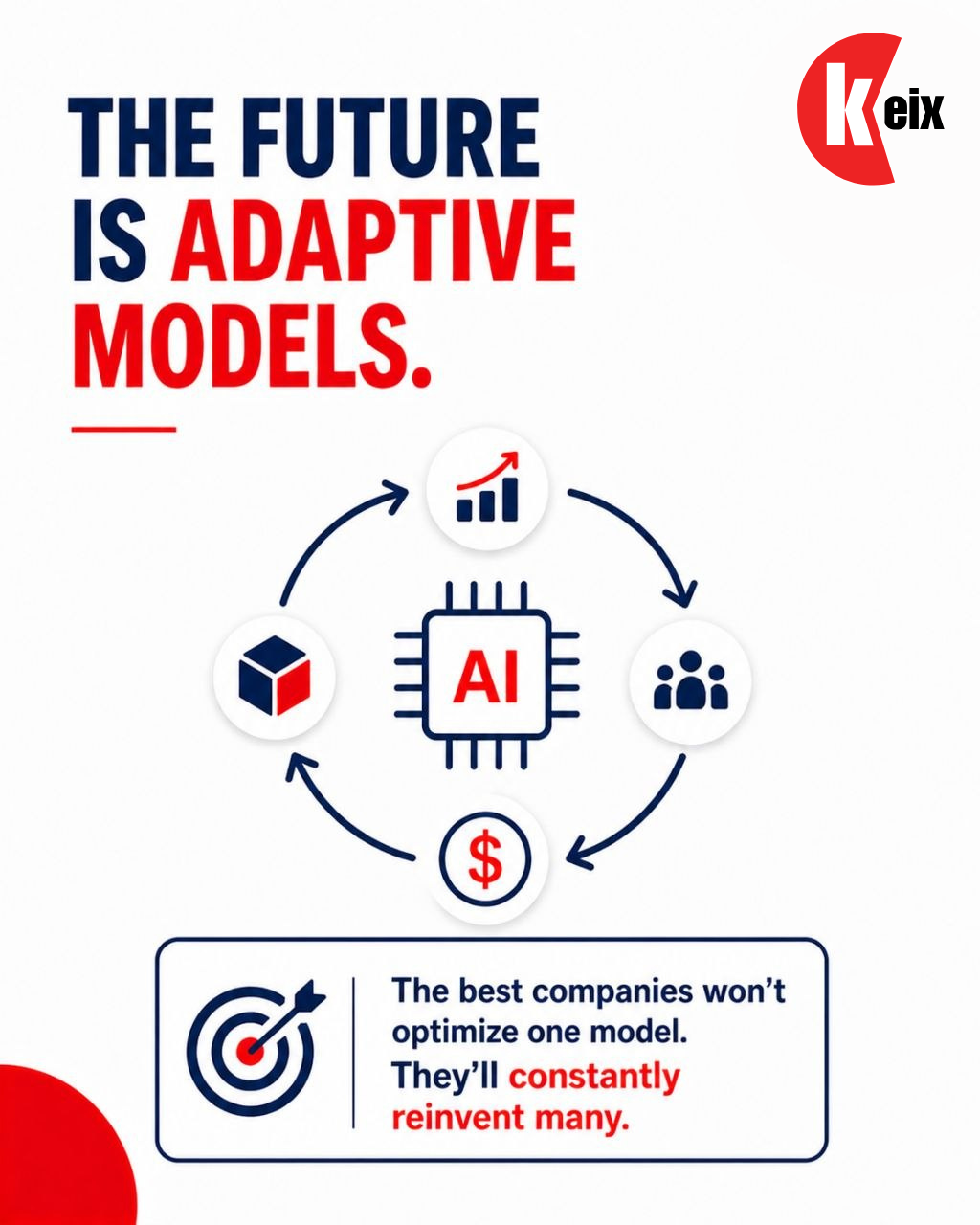
The companies that will thrive over the next decade will likely approach their business model differently. They will treat it as something dynamic rather than fixed — something that evolves continuously instead of remaining stable for years.
This doesn't mean abandoning structure or chasing every trend. It means recognizing that long-term competitiveness now depends on the ability to continuously adapt how value is created and captured.
AI Is Changing More Than Productivity
One of the biggest misconceptions surrounding AI is that it is primarily a productivity tool.
Of course, AI improves productivity. It automates repetitive tasks, accelerates workflows, and reduces operational friction.
But focusing only on efficiency misses the bigger picture.
AI is changing the economics of business itself.
It enables companies to personalize experiences at scale, create adaptive pricing systems, launch services faster, and continuously redesign customer relationships. Entire business architectures are becoming more flexible because of it.
This is why AI should not be viewed only as a tool for optimization.
It is also a catalyst for business model reinvention.
And the organizations that understand this early will likely gain an enormous strategic advantage.
The Companies That Will Win
The companies that succeed in the next era probably won't be the ones with the biggest AI budgets or the most sophisticated dashboards.
They'll be the ones capable of adapting faster when the logic of value creation changes.
They'll understand that efficiency alone is no longer enough. That products alone are no longer enough. And that business models can no longer remain static for decades.
Most importantly, they'll understand that reinvention is no longer an occasional strategic exercise.
It is becoming a permanent capability.
Because in the end, your business model may not be obsolete yet. But your mindset might be.