The Promise of a Data-Driven World
We like to think we live in a data-driven world. Data is everywhere—collected, stored, visualized, and shared at an unprecedented scale. Organizations proudly showcase their dashboards, invest in sophisticated analytics tools, and talk about "insights" as if they were the ultimate competitive advantage.
And yet, if you look a little closer, a paradox emerges.
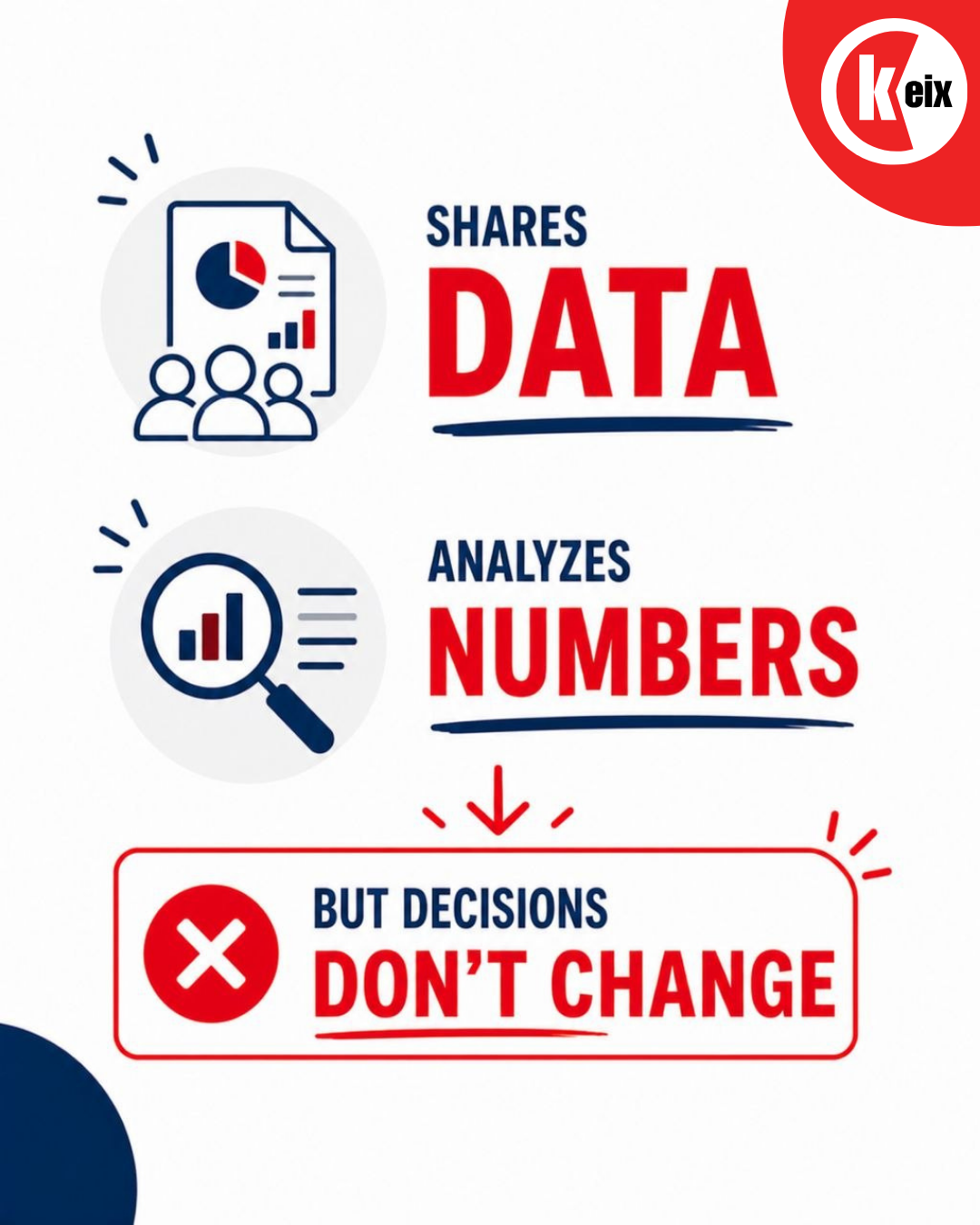
Despite all this data, many decisions don't really change. Strategies remain familiar. Priorities stay the same. The presence of data creates the feeling of progress, but not always the reality of it.
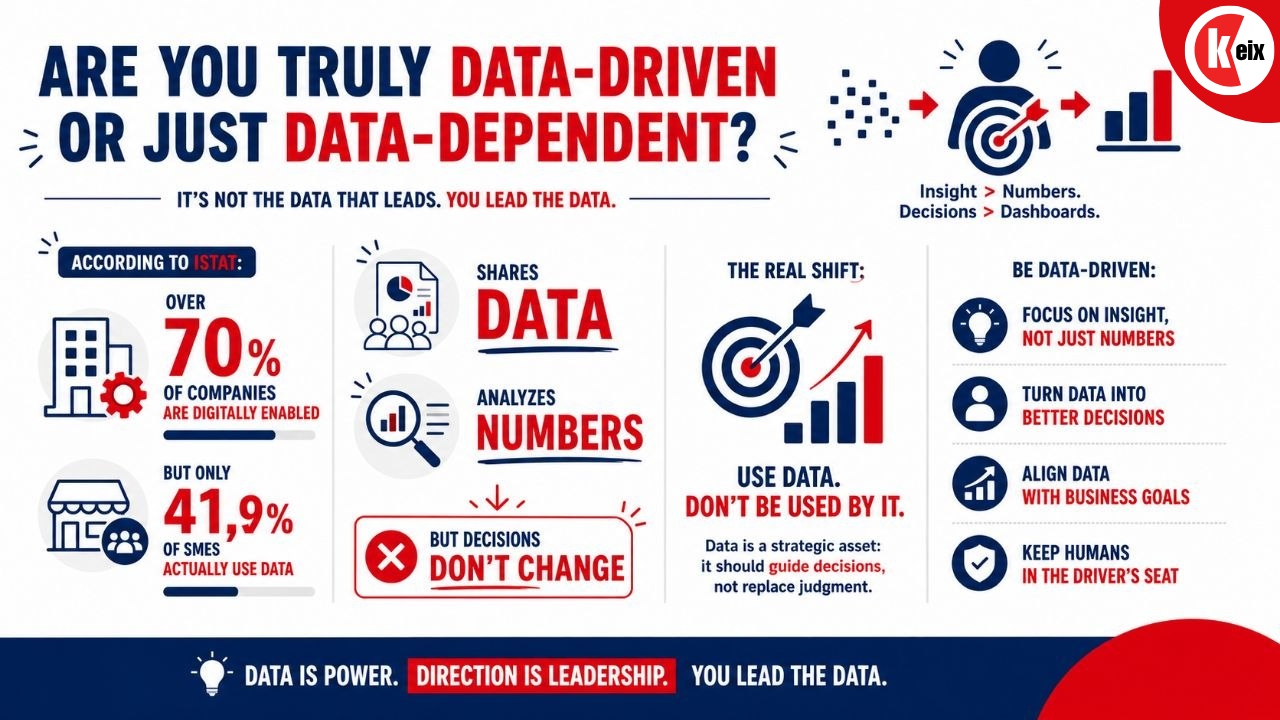
This is where an uncomfortable question comes in: are companies truly data-driven, or have they quietly become data-dependent?
The Subtle Trap of Data Dependency
Being data-dependent doesn't look like a problem at first. In fact, it often appears as rigor and discipline.
Decisions are delayed while waiting for more information. Teams hesitate to move forward without "one more analysis." Reports are generated, shared, discussed—and then quietly archived, without truly influencing what happens next.
In this context, data becomes less of a guide and more of a safety net. It is used to validate choices that were already leaning in a certain direction, rather than to challenge them.
On the surface, everything looks right. There are metrics, KPIs, visualizations. But underneath, decision-making hasn't fundamentally evolved.
When More Data Doesn't Mean Better Decisions
There is a common assumption that more data leads to better decisions. It sounds logical, but reality is more complex.
The more information we have, the easier it becomes to overanalyze, to second-guess, or to delay. What was meant to enable clarity can quickly turn into noise.
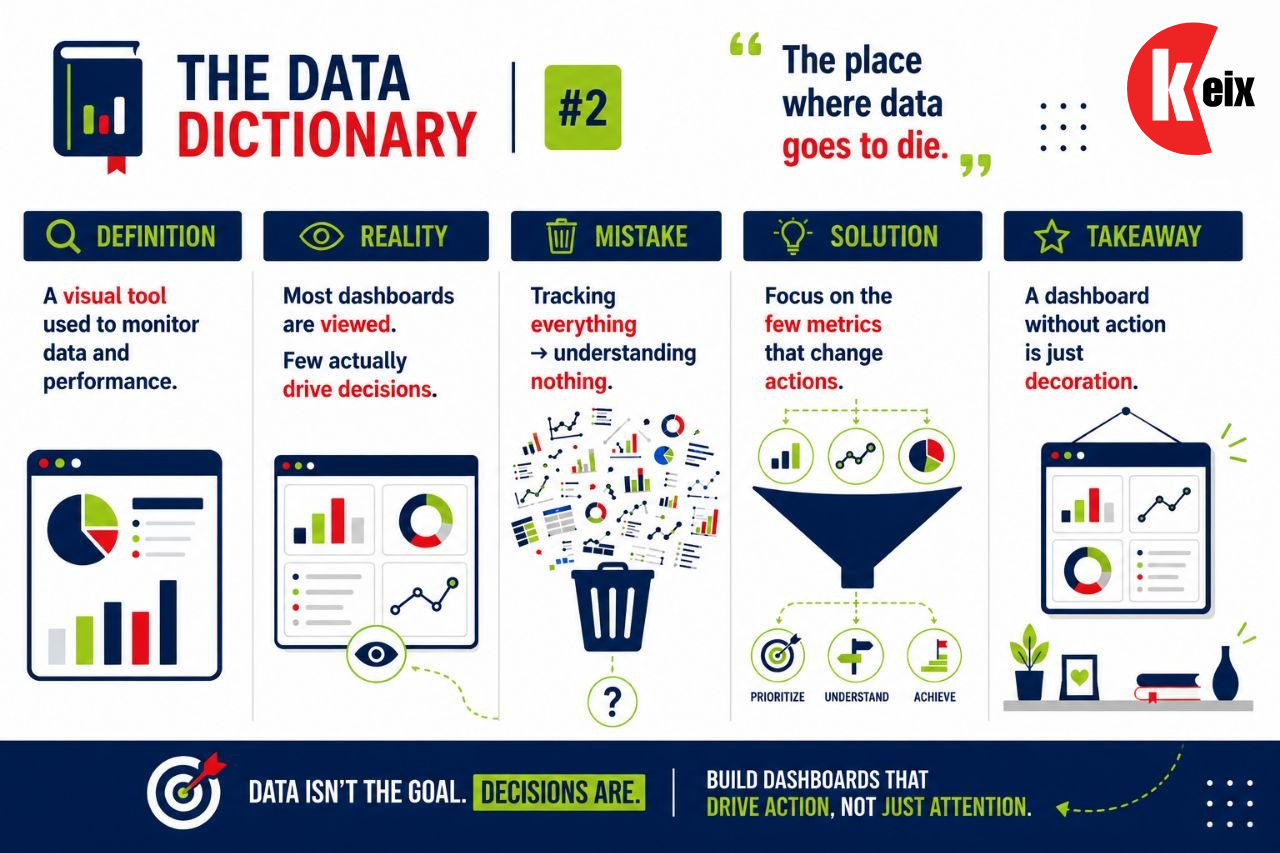
A dashboard might tell you what is happening, but it won't tell you what to prioritize. A report might highlight a trend, but it won't decide whether you should act on it.
That step requires interpretation. It requires context. And above all, it requires judgment.
Because data doesn't make decisions. People do.
From Numbers to Insight
The organizations that truly benefit from data are not the ones that collect the most of it, but the ones that are able to extract meaning from it.
Numbers, by themselves, are rarely enough. What matters is the insight behind those numbers, and, even more importantly, what happens next.
This is where a subtle shift begins to take shape. Instead of asking, "What does the data say?" the question becomes, "What does this mean for us?"
It's a move from observation to interpretation, from reporting to understanding.
And that shift is what transforms data from something passive into something powerful.
Decisions Still Belong to People
Even in the most advanced organizations, decision-making remains a human process.
Data can illuminate patterns. It can reveal trends that would otherwise remain invisible. It can reduce uncertainty. But it cannot take responsibility.
When organizations start treating data as an authority rather than a tool, they risk losing something essential: ownership.
The most effective teams don't outsource decisions to dashboards. They use data to inform their thinking, not to replace it. They are willing to act even when the picture is incomplete, because they understand that waiting for perfect certainty often means not moving at all.
Clarity Over Complexity
In a world where everything can be measured, the real challenge is deciding what actually matters.
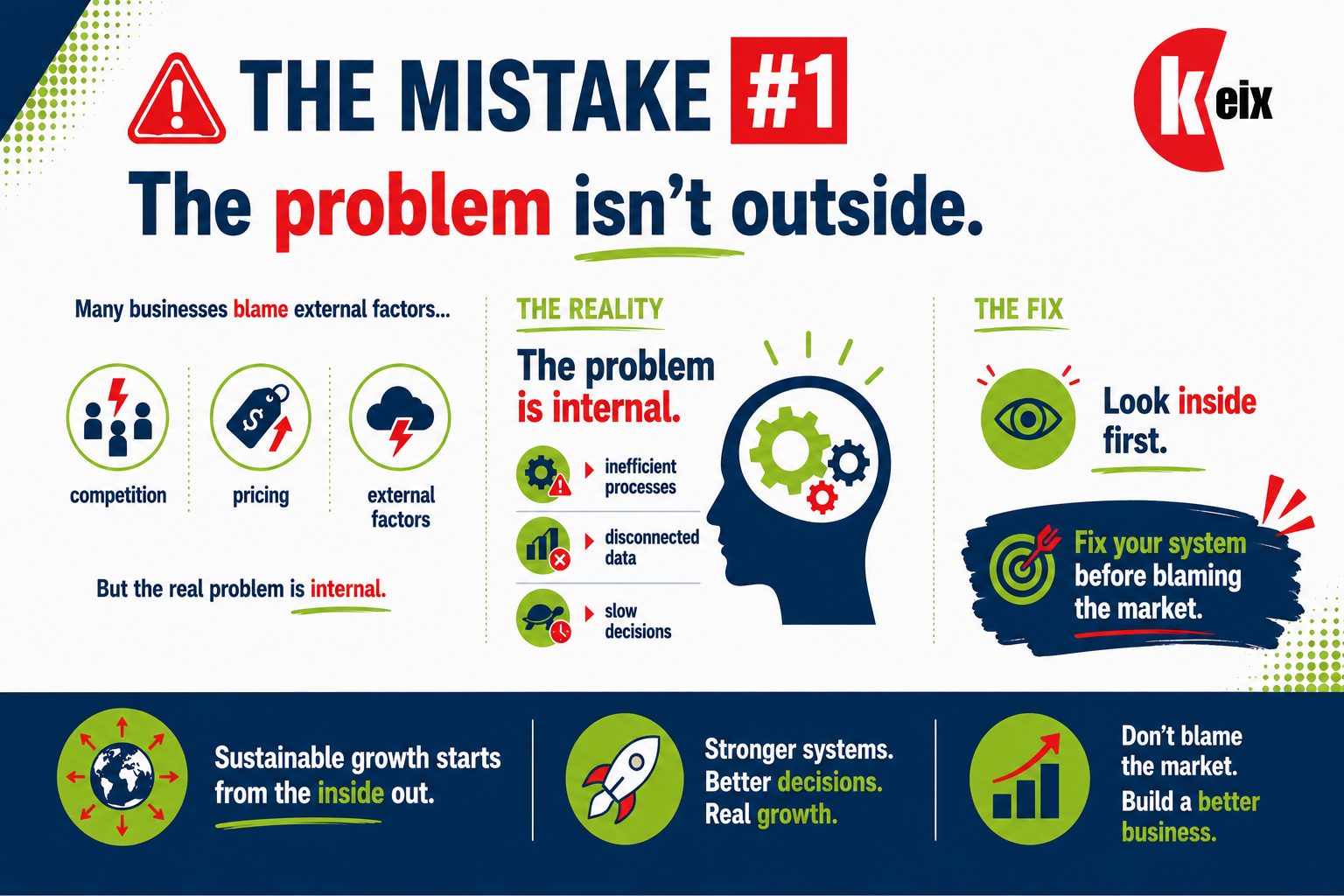
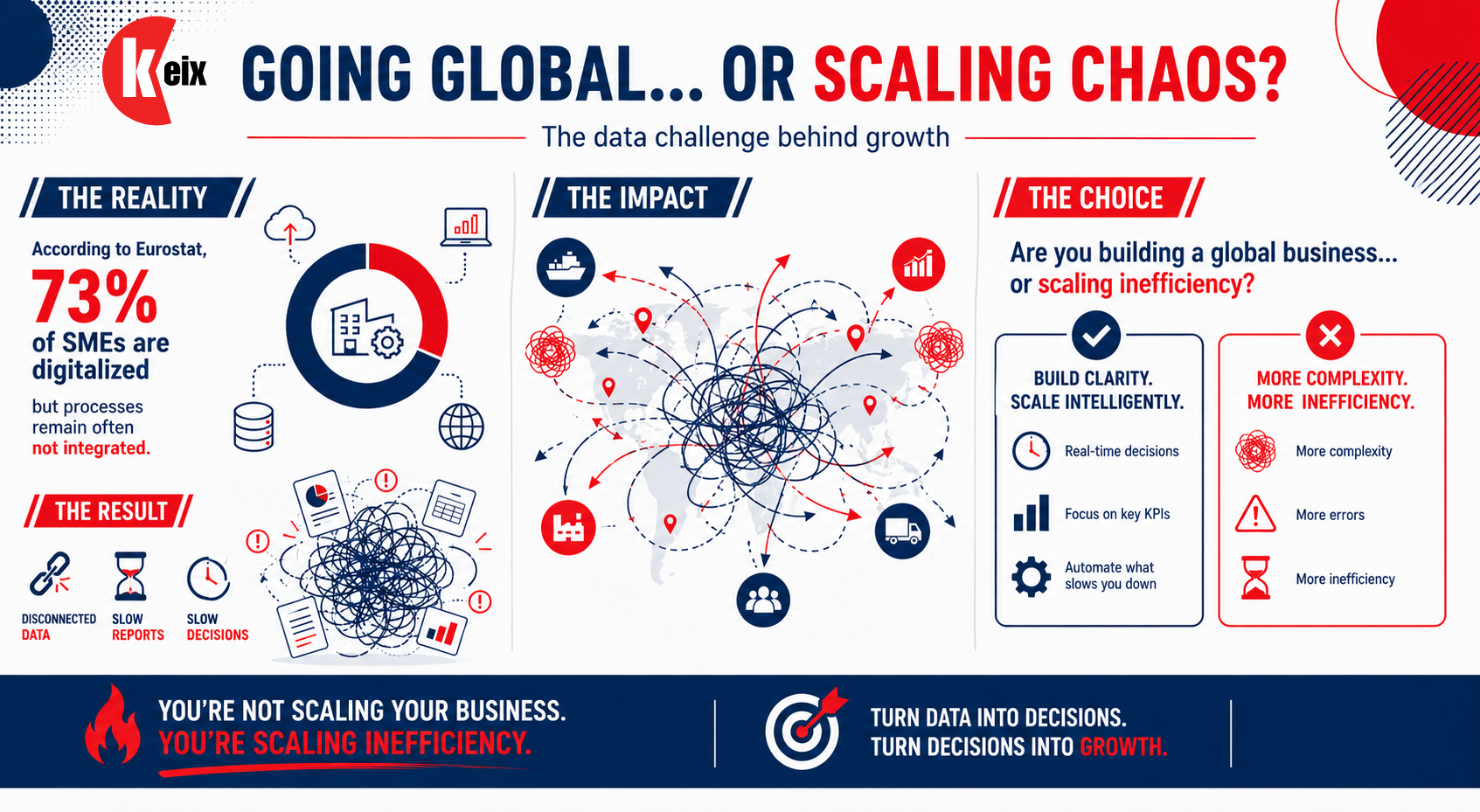
It's easy to fall into the trap of tracking more, analyzing more, and building increasingly complex systems. But complexity doesn't guarantee better outcomes. In many cases, it makes action harder.
Clarity, on the other hand, creates momentum.
Organizations that are truly data-driven focus on relevance over volume. They identify the few signals that really matter and use them to guide decisions.
Because in the end, value doesn't come from how much you know, but from what you do with what you know.
From Data to Direction
At its core, being data-driven is not about tools or technologies. It's about direction.
It's about using data to challenge assumptions, to sharpen strategy, and to enable better decisions. It's about connecting insight with intent, and analysis with action.
This requires a mindset shift.
Data is not the endpoint. It's part of a broader process, one that includes experience, intuition, and leadership.
When that balance is right, data becomes a powerful ally. When it's not, it becomes a distraction.
You Lead the Data
There is a common belief that data should "drive" organizations.
But that framing is misleading.
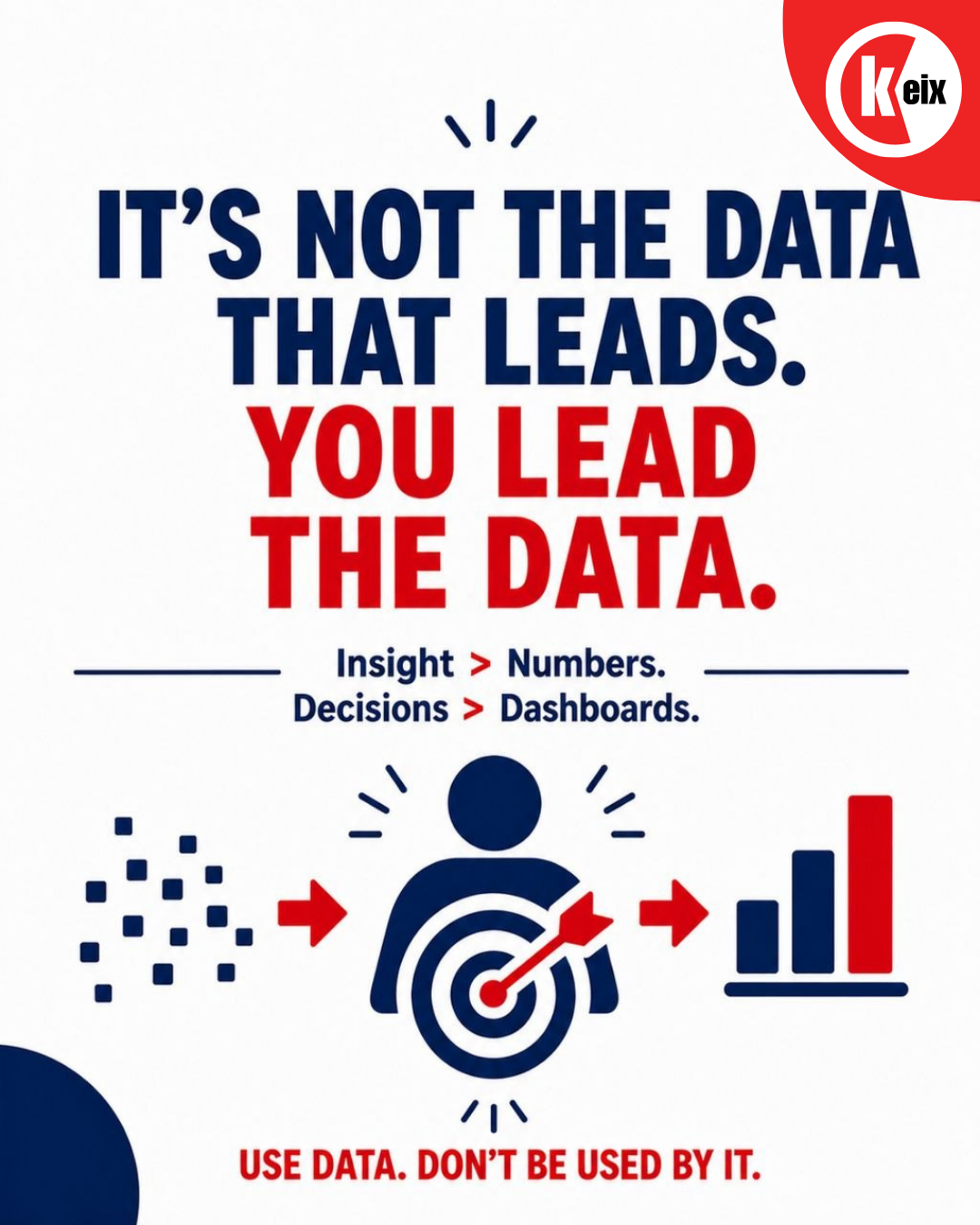
Data doesn't lead. You do.
Data is a tool, one of the most powerful we have, but still a tool. Its value depends entirely on how it is used.
Without direction, data is just noise. Without decisions, data is just decoration.
The real advantage comes from the ability to turn information into action, consistently and intentionally.
Final Thought
Being data-driven is not about having more dashboards, more reports, or more metrics.
It's about making better decisions, again and again.
So the next time you look at your data, take a moment to ask yourself:
Is this helping us act differently… or just confirming what we already believe?
Because in the end, the goal is not to have data. It's to use it to move forward.